What do you need to get ready at home?
Check the rooms your parent will use. List what needs to be done and what to ask about equipment or alerts.
Make a home setup list
Free room photo review
Not sure what to change before they come home? Send a room photo. We’ll review what we can see and email you suggestions.
Free to use. No email needed. Start with the part your family is working through right now.
Check the rooms your parent will use. List what needs to be done and what to ask about equipment or alerts.
Make a home setup listEnter the hours and rate to estimate the cost, or compare two agency quotes.
Estimate home-care costsPut both monthly costs side by side. Keep any missing prices on your list of questions.
Compare the monthly costsList the times you want help and who can come. See which hours still need someone.
Plan who can be thereThe First Night Home Quick Sheet puts the next task, the person handling it, and the number to call in one easy-to-find place.
Open the free Quick SheetPrint a copy or email yourself a link.
Looking for the full discharge checklist? →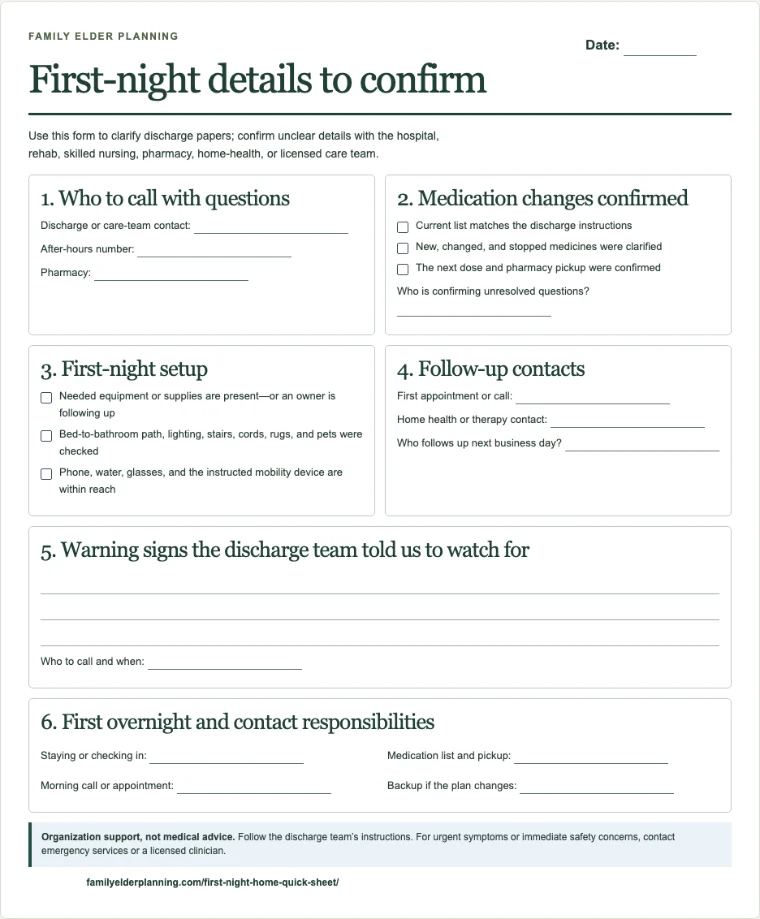
Use a free tool to organize the details, then copy or print what helps your family keep going.

Write down the tasks you need help with, ask agencies what they provide, and compare their schedules and prices.
Explore help at homeHelping from another city? Start here →OPTIONAL PAID TOOLS
Choose a printable kit or a private workspace to organize your family’s next steps.
PRINTABLE & FILLABLE
Use the printable, fillable packet to organize home setup, follow-up calls, appointments, family coverage, and handoffs during the first two weeks.
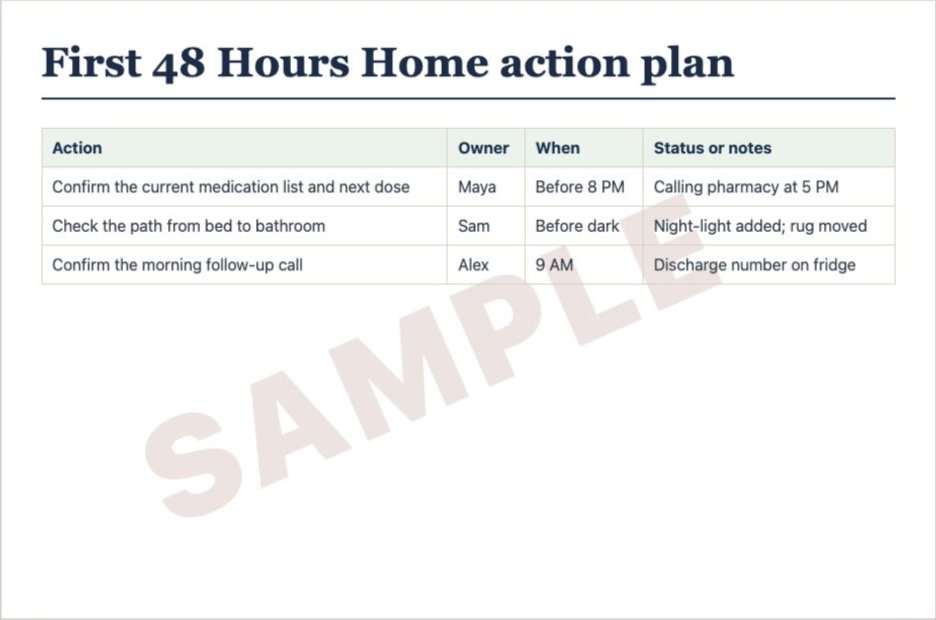
$5 one-time
See the $5 Home KitYOUR PRIVATE BROWSER WORKSPACE
Use a simple web app to keep calls, appointments, tasks, backups, and unanswered questions together for one family care situation. Your plan stays in this browser on this device unless you export or print it.
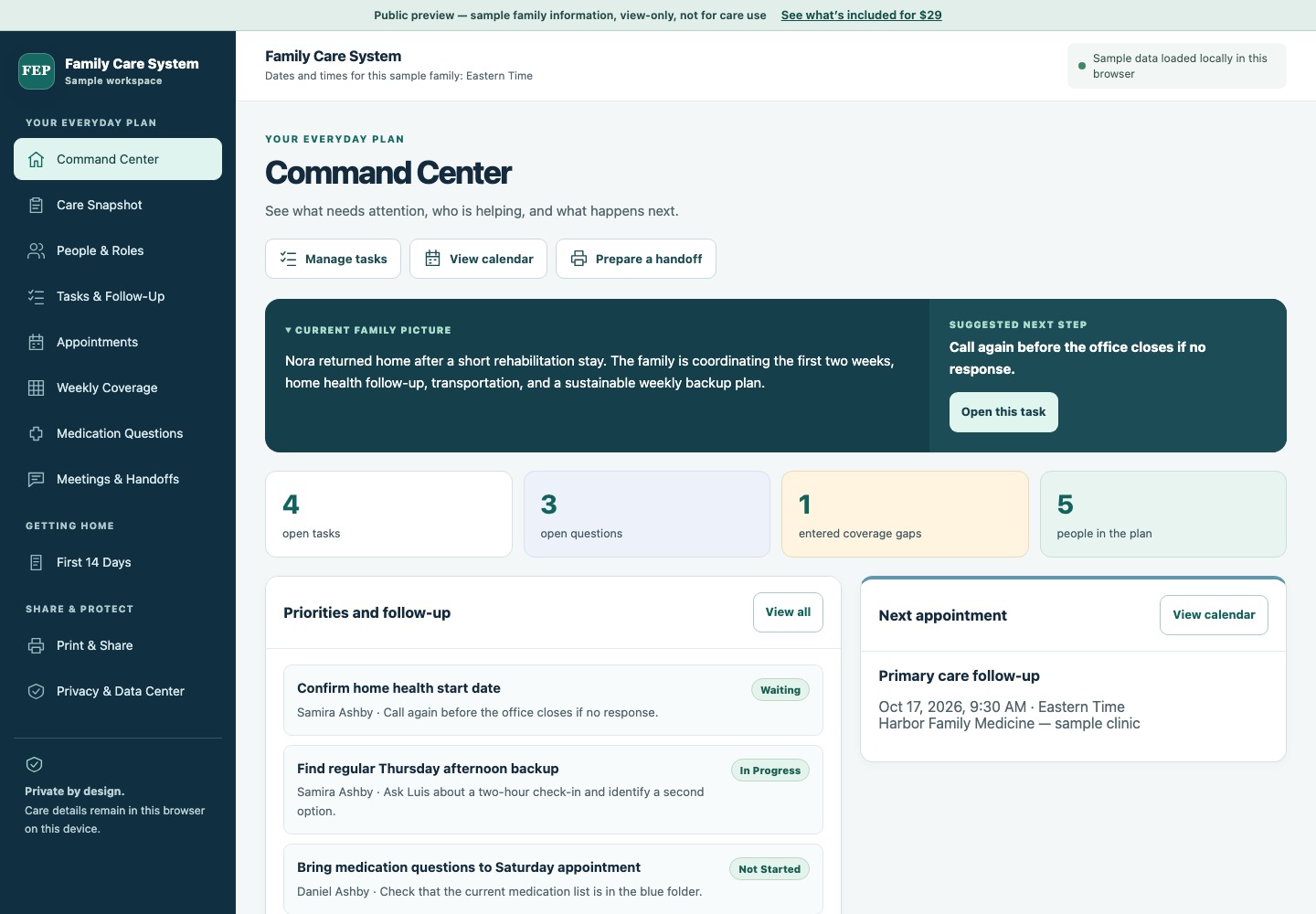
$29 one time · no subscription · includes the $5 Home Kit
See the Care SystemWHY FAMILY ELDER PLANNING EXISTS
Faz Azad started Family Elder Planning after his own family struggled to organize a hospital-to-home transition. He wanted families to find the important details together in one easy-to-reference place.
Read why this site existsFree family planner
Choose where your loved one is and what led to the transition to get a starter plan. You can add personal details if they help. Your entries stay on this device and are not sent to Family Elder Planning.
These two choices shape your starter plan. No name or personal notes are needed.
Choose your situation to create discharge questions, medication and home-setup prompts, follow-up tasks, warning-sign questions, family owners, and a first-14-days log.
No. The free tools work without an account or email. Resource email and continuing updates are separate, optional choices.
Calculator and worksheet entries stay in your browser. Optional worksheet saving uses this browser profile. Care System plans remain local unless you deliberately export or print them.
FEP helps you organize questions and compare information. It does not deliver care or select a provider. Ask your care team about clinical needs.
Podcast: Episode 1
A discussion about the first night, the next morning, and questions that may still need an answer.
Read the first 48 hours guide →